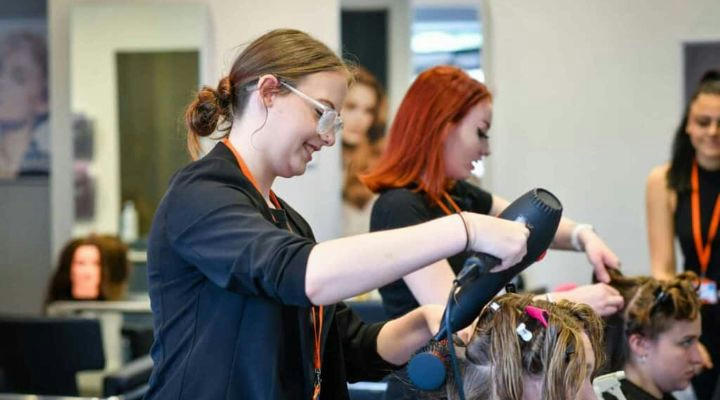
Across the U.S., a growing number of people are seeking legal, paid alternatives to expensive beauty school. Paid Hairdressing Training Programs are increasingly viewed as a structured career pathway that allows individuals to complete state-approved training while maintaining income stability.
What Is a Paid Cosmetology Apprenticeship?
A paid apprenticeship is a regulated training model where participants are employed by a licensed salon. Unlike informal salon assistant roles, apprentices follow a structured framework that combines supervised work with documented instruction.
The curriculum, training hours, and skill evaluations are formally tracked and recognized by state licensing authorities, similar in scope to a professional Hairdressing Course, but delivered through a workplace-based model.
Legality and Licensing Standards
A compliant paid apprenticeship must meet specific regulatory criteria to ensure eligibility for licensure. Approved programs typically:
-
Align with State Board of Cosmetology requirements
-
Accumulate officially recognized clock hours
-
Ensure all training is documented and verifiable
This structure helps participants avoid unrecognized experience that would not count toward licensure.
Earn While You Learn: Financial Considerations
One of the most discussed aspects of Paid Hairdressing Training Programs is the ability to earn income while completing required training hours.
This approach is often considered by individuals who:
-
Cannot pause employment to attend full-time schooling
-
Prefer practical, job-connected Hair Classes
-
Are transitioning careers and need financial continuity
Compensation structures vary by state and employer and may change as skills and responsibilities increase.
Licensing Without Traditional Beauty School Attendance
In many U.S. states, classroom-based beauty school is not the sole route to licensure. When an apprenticeship meets required instructional hours and covers state-tested competencies, participants may apply for the same professional license issued to traditional school graduates.
This pathway must still satisfy all regulatory, educational, and examination standards.
Core Skills and Training Focus
Structured programs emphasize comprehensive skill development, including:
-
Hair cutting, styling, and chemical services
-
Sanitation, safety, and regulatory compliance
-
Client consultation and professional communication
-
Salon workflow and service standards
These areas mirror the curriculum covered in formal Hairdressing Course programs, with added real-world exposure.
The Role of Mentorship
Apprentices train under the supervision of experienced, licensed professionals. Learning in a functioning salon environment allows participants to:
-
Observe industry-standard practices
-
Develop consistent professional habits
-
Gain customer service experience through real client interaction
Mentorship plays a central role in skill refinement and professional growth.
Who Commonly Considers This Training Path?
This model focuses on competency and compliance rather than academic background. It is often explored by:
-
Aspiring stylists concerned about tuition costs
-
Hands-on learners who prefer applied Hair Classes
-
Adults transitioning from retail, hospitality, or service roles
Programs emphasize long-term skill development rather than accelerated credentialing.
How to Identify a Compliant Program
Before enrolling, candidates should confirm:
-
The salon holds authorization to train apprentices
-
The curriculum aligns with state licensing requirements
-
Training hours are properly tracked and reportable
-
A qualified mentor is assigned for supervision
Verification with the state licensing board is strongly recommended.
Final Thoughts
For individuals seeking an employment-connected route into the beauty industry, Paid Hairdressing Training Programs offer a regulated and practical training option. By combining structured instruction with supervised salon experience, apprentices can work toward licensure while building professional skills in a real-world setting.