The Real Cost of Dental Implants: A Transparent Guide to Pricing, Procedures, & Value
Considering dental implants to replace a missing tooth? You're not alone. Implants are widely regarded as the gold standard for tooth replacement, offering a permanent solution that looks, feels, and functions like a natural tooth. However, navigating the financial aspect of this procedure can often feel complex and confusing. The advertised price for a single implant can vary wildly, leaving many patients wondering what the final bill will actually be. This guide provides a clear, comprehensive breakdown of dental implant costs in the U.S., explaining why prices differ, what factors are at play, and how to plan for this significant health investment. The goal is to provide the knowledge needed to make informed decisions without any surprises.

Why Dental Implant Costs Vary So Much

The simple answer is that a dental implant is not a single, one-size-fits-all product. It's a multi-stage, custom-engineered medical procedure. The final cost depends on a combination of three primary factors: treatment complexity, geographic location, and material choices.

1. Understanding Treatment Complexity and Case-Specific Costs

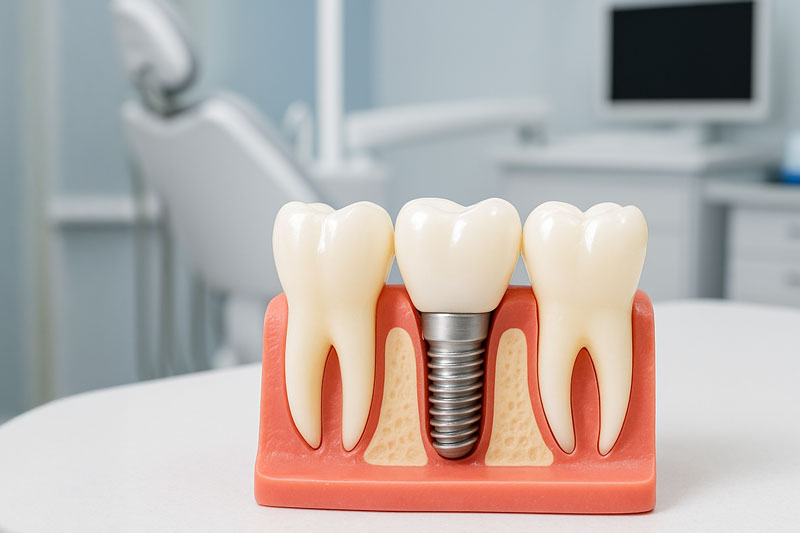
The foundation of any implant cost is the clinical work required. A straightforward case is very different from one needing extensive preparation. A standard single-tooth implant restoration typically involves three core components:

  • The Implant Body: The titanium or zirconia post surgplaced into the jawbone.

  • The Abutment: The connector piece that sits on top of the implant.

  • The Crown: The visible, artificial tooth custom-made to match surrounding teeth.

While a simple case might fall within a certain range, additional procedures are often necessary to create a healthy foundation for the implant.

Table 1: Typical Price Ranges for Core Implant Components in the U.S.


Component Typical Retail Range (per tooth/site) Notes
Implant Placement (Surgical Fee) $1,000 - $2,500+ Surgeon's fee for placing the implant post into the bone.
Abutment $300 - $800+ Standard titanium abutments are on the lower end; custom zirconia abutments for esthetics cost more.
Crown (Restorative Fee) $1,000 - $3,000+ Porcelain-fused-to-metal or all-ceramic crowns. Material and lab fees drive the cost.

Key variables that change cost include:

  • Bone Grafting: If the jawbone has deteriorated, a graft is needed to create a solid base. Costs vary significantly based on the type of graft material and the procedure's complexity.

    • Typical Range: $500 - $3,000+ per site.

  • Sinus Lift: For missing upper back teeth, this procedure lifts the sinus membrane to make room for bone graft and implant placement.

    • Typical Range: $1,500 - $4,000+.

  • Tooth Extraction: Simple extractions are less expensive, but surgical extractions or those requiring socket preservation (to maintain bone after removal) add to the cost.

    • Typical Range: $150 - $650+ per tooth.

  • Soft-Tissue Grafting: Sometimes gum tissue needs to be augmented for better esthetics and long-term health around the implant.

    • Typical Range: $500 - $2,500+ per site.

2. Geographic and Regional Cost Variations

Where a patient lives has a measurable impact on the final price. Dental practices, like all businesses, have overhead costs that vary by region.

Table 2: How Location Impacts Average Single-Implant Costs


Geographic Region Approximate Single-Implant Range (Surgical & Restorative)
Major Coastal Metros (e.g., NYC, LA, SF) $4,500 - $8,000+
Suburban & Mid-Sized Cities $3,500 - $6,500
Smaller Towns & Rural Regions $2,800 - $5,500

Note: These are estimates for a straightforward case without complex grafting. It's also wise to compare prices within the same city. For instance, dental schools and university-affiliated clinics often offer supervised care at significantly reduced fees, while boutique specialty practices may charge a premium for advanced technology and luxury amenities.

3. Material Selection and Technology Impact on Pricing

Choices about materials and technology also influence the final treatment estimate.

  • Implant Material: Titanium implants are the time-tested standard. Zirconia implants, a metal-free ceramic alternative popular for patients with metal sensitivities or specific esthetic goals, often carry a higher price tag.

  • Crown Material: A standard porcelain-fused-to-metal crown is generally less expensive than a premium, multi-layered all-ceramic or zirconia crown, which offers superior translucency and a natural look.

  • Technology:

    • 3D Cone-Beam Computed Tomography (CBCT): This advanced imaging provides a detailed 3D view of the jaw, allowing for precise treatment planning. This is often a separate diagnostic fee of several hundred dollars.

    • Computer-Guided Surgery: Using CBCT data, a custom surgical guide is created to place the implant with pinpoint accuracy. This workflow can add several hundred to over a thousand dollars to the procedure but can also reduce surgery time and risk.

Practical Pricing Examples: Seeing How Costs Add Up

To illustrate how these factors combine, here are a few common scenarios. These are estimates and individual plans will vary.

  • Simple Case: Single Tooth, Adequate Bone

    • Includes: Implant placement, standard abutment, ceramic crown.

    • Estimated Total: $3,500 - $5,500

  • Moderate Case: Single Tooth with Bone Grafting

    • Includes: Extraction, bone graft, implant, abutment, and crown.

    • Estimated Total: $5,000 - $8,500

  • Complex Case: Molar with Sinus Lift

    • Includes: Extraction, sinus lift, bone graft, implant placement, custom abutment, and crown.

    • Estimated Total: $7,000 - $12,000+

For larger restorations, such as an implant-supported bridge or a full-arch rehabilitation (like All-on-4), costs scale considerably, often ranging from $15,000 to $50,000+ depending on the number of implants and the type of prosthesis.

How to Obtain an Accurate Estimate and Plan Financially

Given the variables, obtaining a clear and detailed estimate is the most important step. Always ask for a written, itemized treatment plan that includes:

  • Diagnostics: Fees for exams, X-rays, and CBCT scans.

  • Surgery: Surgeon's fees for extractions, grafting, and implant placement.

  • Restoration: Lab and clinical fees for the abutment(s) and crown(s)/prosthesis.

  • Parts: Costs for the implant components themselves.

  • Follow-up: What is included in the post-operative care?

Actionable Steps for Patients:

  1. Seek Multiple Consultations: Especially for complex cases, a second opinion can provide different perspectives and treatment plans. Comparing detailed estimates is invaluable.

  2. Review Dental Insurance: While many plans have annual maximums ($1,000-$2,000) and may not cover the implant itself, they might cover the crown or related procedures like extractions.

  3. Inquire About Phased Treatment: If the full cost is a barrier, ask if the treatment can be broken into phases (e.g., grafting first, implants later) to spread out the expense.

  4. Explore Financing Options: Many clinics offer in-house payment plans or partner with third-party healthcare financing companies. It is crucial to read the terms carefully, as these often involve interest.

Balancing Cost with Long-Term Value

Choosing a dental implant is an investment in long-term oral health. A lower upfront cost doesn't always equal the best value. It's essential to balance price with the clinician's experience and the quality of materials.

Asking targeted questions can help reveal the true value of a quote:

  • "What brand of implant do you use, and what is its track record?"

  • "Is the included crown a stock product or a custom, high-quality restoration from a reputable lab?"

  • "What does the warranty cover, and what are the terms for follow-up care?"

Summary and Practical Takeaways

The cost of dental implants in the U.S. is determined by clinical needs, location, and material choices. A single-tooth implant typically ranges from $3,000 to $7,000, but complex cases requiring grafting or premium materials can be higher.

For patients planning treatment: obtain a detailed written estimate, discuss material and technology trade-offs with a clinician, consider phased treatment plans if needed, and evaluate financing options. While pricing varies, working with a qualified dental implant specialist and reviewing itemized costs can help align clinical goals with budgetary constraints.

Frequently Asked Questions (FAQ)

Q: What is the average cost of a single dental implant?
A: The average cost for the entire process—from implant placement to the final crown—typically falls between $3,500 and $6,500. However, prices can range from $3,000 to over $8,000 depending on individual needs and location.

Q: Are dental implants covered by insurance?
A: Coverage varies widely. Many traditional dental insurance plans consider implants a major procedure and may cover a percentage, but they are often subject to annual maximums. Some newer plans offer specific implant benefits. It is best to check the specific policy details.

Q: Why are dental implants so expensive?
A: The cost reflects the surgical skill, advanced technology (like CBCT scans), high-quality materials (titanium, zirconia, ceramics), and expert laboratory work required to create a custom, long-lasting replacement tooth that integrates with the body.

Q: What is a cheap alternative to dental implants?
A: Less expensive alternatives include dental bridges (which involve shaving down adjacent teeth) and removable partial dentures. However, these options do not prevent bone loss and may need to be replaced more often than implants.

Q: How can I find affordable dental implants near me?
A: Consider consulting dental schools, which often provide treatment at a reduced cost under faculty supervision. Comparing prices from several local oral surgeons or periodontists and asking about payment plans are also effective strategies.


Disclaimer: The information provided in this article is for general informational purposes only and does not constitute medical or financial advice. All treatment costs and outcomes are specific to individual patient needs and geographic location. Readers should consult with a qualified dental professional to obtain an accurate diagnosis and treatment plan for their specific situation.

Trending Now
hot | 2026-03-18 10:05:27
The Real Cost of Dental Implants: A Transparent Guide to Pricing, Procedures, & Value
Considering dental implants to replace a missing tooth? You're not alone. Implants are widely regarded as the gold standard for tooth replacement, offering a permanent solution that looks, feels, and functions like a natural tooth. However, navigating the financial aspect of this procedure can often feel complex and confusing. The advertised price for a single implant can vary wildly, leaving many patients wondering what the final bill will actually be. This guide provides a clear, comprehensive breakdown of dental implant costs in the U.S., explaining why prices differ, what factors are at play, and how to plan for this significant health investment. The goal is to provide the knowledge needed to make informed decisions without any surprises.

Why Dental Implant Costs Vary So Much

The simple answer is that a dental implant is not a single, one-size-fits-all product. It's a multi-stage, custom-engineered medical procedure. The final cost depends on a combination of three primary factors: treatment complexity, geographic location, and material choices.

1. Understanding Treatment Complexity and Case-Specific Costs

The foundation of any implant cost is the clinical work required. A straightforward case is very different from one needing extensive preparation. A standard single-tooth implant restoration typically involves three core components:

  • The Implant Body: The titanium or zirconia post surgplaced into the jawbone.

  • The Abutment: The connector piece that sits on top of the implant.

  • The Crown: The visible, artificial tooth custom-made to match surrounding teeth.

While a simple case might fall within a certain range, additional procedures are often necessary to create a healthy foundation for the implant.

Table 1: Typical Price Ranges for Core Implant Components in the U.S.


Component Typical Retail Range (per tooth/site) Notes
Implant Placement (Surgical Fee) $1,000 - $2,500+ Surgeon's fee for placing the implant post into the bone.
Abutment $300 - $800+ Standard titanium abutments are on the lower end; custom zirconia abutments for esthetics cost more.
Crown (Restorative Fee) $1,000 - $3,000+ Porcelain-fused-to-metal or all-ceramic crowns. Material and lab fees drive the cost.

Key variables that change cost include:

  • Bone Grafting: If the jawbone has deteriorated, a graft is needed to create a solid base. Costs vary significantly based on the type of graft material and the procedure's complexity.

    • Typical Range: $500 - $3,000+ per site.

  • Sinus Lift: For missing upper back teeth, this procedure lifts the sinus membrane to make room for bone graft and implant placement.

    • Typical Range: $1,500 - $4,000+.

  • Tooth Extraction: Simple extractions are less expensive, but surgical extractions or those requiring socket preservation (to maintain bone after removal) add to the cost.

    • Typical Range: $150 - $650+ per tooth.

  • Soft-Tissue Grafting: Sometimes gum tissue needs to be augmented for better esthetics and long-term health around the implant.

    • Typical Range: $500 - $2,500+ per site.

2. Geographic and Regional Cost Variations

Where a patient lives has a measurable impact on the final price. Dental practices, like all businesses, have overhead costs that vary by region.

Table 2: How Location Impacts Average Single-Implant Costs


Geographic Region Approximate Single-Implant Range (Surgical & Restorative)
Major Coastal Metros (e.g., NYC, LA, SF) $4,500 - $8,000+
Suburban & Mid-Sized Cities $3,500 - $6,500
Smaller Towns & Rural Regions $2,800 - $5,500

Note: These are estimates for a straightforward case without complex grafting. It's also wise to compare prices within the same city. For instance, dental schools and university-affiliated clinics often offer supervised care at significantly reduced fees, while boutique specialty practices may charge a premium for advanced technology and luxury amenities.

3. Material Selection and Technology Impact on Pricing

Choices about materials and technology also influence the final treatment estimate.

  • Implant Material: Titanium implants are the time-tested standard. Zirconia implants, a metal-free ceramic alternative popular for patients with metal sensitivities or specific esthetic goals, often carry a higher price tag.

  • Crown Material: A standard porcelain-fused-to-metal crown is generally less expensive than a premium, multi-layered all-ceramic or zirconia crown, which offers superior translucency and a natural look.

  • Technology:

    • 3D Cone-Beam Computed Tomography (CBCT): This advanced imaging provides a detailed 3D view of the jaw, allowing for precise treatment planning. This is often a separate diagnostic fee of several hundred dollars.

    • Computer-Guided Surgery: Using CBCT data, a custom surgical guide is created to place the implant with pinpoint accuracy. This workflow can add several hundred to over a thousand dollars to the procedure but can also reduce surgery time and risk.

Practical Pricing Examples: Seeing How Costs Add Up

To illustrate how these factors combine, here are a few common scenarios. These are estimates and individual plans will vary.

  • Simple Case: Single Tooth, Adequate Bone

    • Includes: Implant placement, standard abutment, ceramic crown.

    • Estimated Total: $3,500 - $5,500

  • Moderate Case: Single Tooth with Bone Grafting

    • Includes: Extraction, bone graft, implant, abutment, and crown.

    • Estimated Total: $5,000 - $8,500

  • Complex Case: Molar with Sinus Lift

    • Includes: Extraction, sinus lift, bone graft, implant placement, custom abutment, and crown.

    • Estimated Total: $7,000 - $12,000+

For larger restorations, such as an implant-supported bridge or a full-arch rehabilitation (like All-on-4), costs scale considerably, often ranging from $15,000 to $50,000+ depending on the number of implants and the type of prosthesis.

How to Obtain an Accurate Estimate and Plan Financially

Given the variables, obtaining a clear and detailed estimate is the most important step. Always ask for a written, itemized treatment plan that includes:

  • Diagnostics: Fees for exams, X-rays, and CBCT scans.

  • Surgery: Surgeon's fees for extractions, grafting, and implant placement.

  • Restoration: Lab and clinical fees for the abutment(s) and crown(s)/prosthesis.

  • Parts: Costs for the implant components themselves.

  • Follow-up: What is included in the post-operative care?

Actionable Steps for Patients:

  1. Seek Multiple Consultations: Especially for complex cases, a second opinion can provide different perspectives and treatment plans. Comparing detailed estimates is invaluable.

  2. Review Dental Insurance: While many plans have annual maximums ($1,000-$2,000) and may not cover the implant itself, they might cover the crown or related procedures like extractions.

  3. Inquire About Phased Treatment: If the full cost is a barrier, ask if the treatment can be broken into phases (e.g., grafting first, implants later) to spread out the expense.

  4. Explore Financing Options: Many clinics offer in-house payment plans or partner with third-party healthcare financing companies. It is crucial to read the terms carefully, as these often involve interest.

Balancing Cost with Long-Term Value

Choosing a dental implant is an investment in long-term oral health. A lower upfront cost doesn't always equal the best value. It's essential to balance price with the clinician's experience and the quality of materials.

Asking targeted questions can help reveal the true value of a quote:

  • "What brand of implant do you use, and what is its track record?"

  • "Is the included crown a stock product or a custom, high-quality restoration from a reputable lab?"

  • "What does the warranty cover, and what are the terms for follow-up care?"

Summary and Practical Takeaways

The cost of dental implants in the U.S. is determined by clinical needs, location, and material choices. A single-tooth implant typically ranges from $3,000 to $7,000, but complex cases requiring grafting or premium materials can be higher.

For patients planning treatment: obtain a detailed written estimate, discuss material and technology trade-offs with a clinician, consider phased treatment plans if needed, and evaluate financing options. While pricing varies, working with a qualified dental implant specialist and reviewing itemized costs can help align clinical goals with budgetary constraints.

Frequently Asked Questions (FAQ)

Q: What is the average cost of a single dental implant?
A: The average cost for the entire process—from implant placement to the final crown—typically falls between $3,500 and $6,500. However, prices can range from $3,000 to over $8,000 depending on individual needs and location.

Q: Are dental implants covered by insurance?
A: Coverage varies widely. Many traditional dental insurance plans consider implants a major procedure and may cover a percentage, but they are often subject to annual maximums. Some newer plans offer specific implant benefits. It is best to check the specific policy details.

Q: Why are dental implants so expensive?
A: The cost reflects the surgical skill, advanced technology (like CBCT scans), high-quality materials (titanium, zirconia, ceramics), and expert laboratory work required to create a custom, long-lasting replacement tooth that integrates with the body.

Q: What is a cheap alternative to dental implants?
A: Less expensive alternatives include dental bridges (which involve shaving down adjacent teeth) and removable partial dentures. However, these options do not prevent bone loss and may need to be replaced more often than implants.

Q: How can I find affordable dental implants near me?
A: Consider consulting dental schools, which often provide treatment at a reduced cost under faculty supervision. Comparing prices from several local oral surgeons or periodontists and asking about payment plans are also effective strategies.


Disclaimer: The information provided in this article is for general informational purposes only and does not constitute medical or financial advice. All treatment costs and outcomes are specific to individual patient needs and geographic location. Readers should consult with a qualified dental professional to obtain an accurate diagnosis and treatment plan for their specific situation.

Trending Now