Treatment Complexity and Case-Specific Cost Determinants
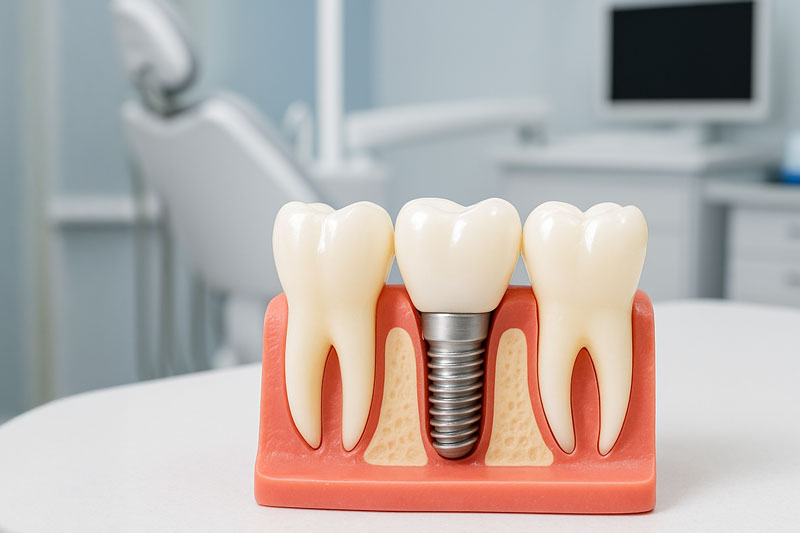
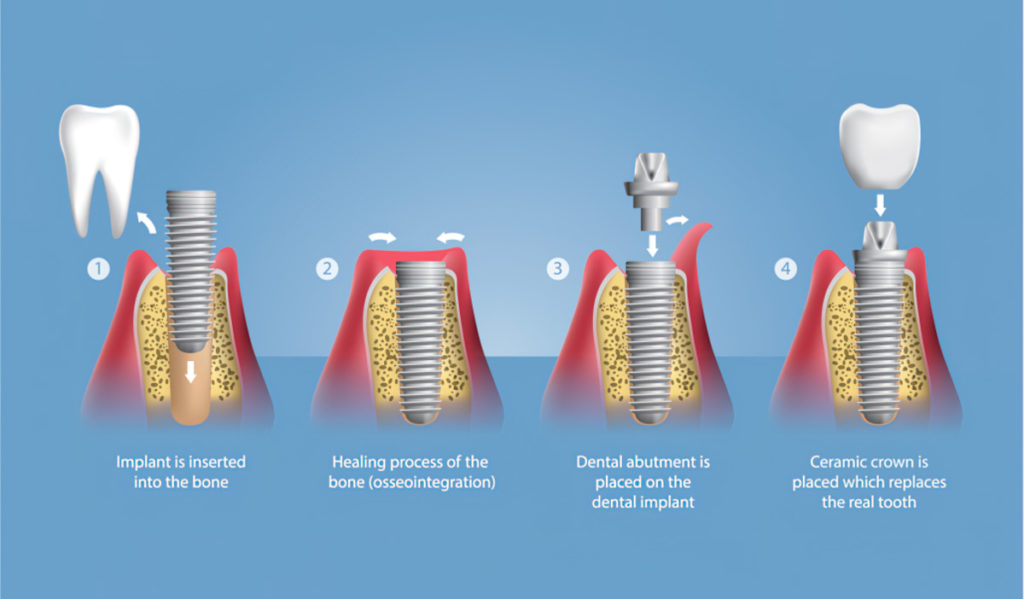
Understanding the anatomy of a dental implant treatment helps explain why total price estimates vary. A standard single-tooth implant restoration commonly includes three core components: the surgical placement of the implant body, an abutment (the connector), and the final crown. Typical retail ranges for a single-tooth implant in the US often fall between approximately $3,000 and $7,000, but full case costs can be lower or substantially higher depending on required preparatory procedures and clinical complexity. For an overview of typical component pricing, see resources such as CostHelper and GoodRx Health.
Key variables that change cost include the number of implants needed, the existing condition of the jawbone, and whether additional surgeries—such as extractions, bone grafting, or sinus lifts—are necessary. For example, a straightforward single implant placed into adequate native bone may only require the primary components above, while a patient who needs bone augmentation can expect additional fees that reflect materials, graft harvesting or grafting materials, and surgical time.
- Implant placement (surgical phase): often ranges from $1,000 to $2,000 per implant, depending on surgeon fees and facility costs.
- Abutment: typically $300 to $600 for standard options; custom abutments are more expensive.
- Crown (restorative phase): porcelain or zirconia crowns commonly range from $1,000 to $3,000 per tooth.
When bone volume is insufficient, bone grafting is a common adjunct. Bone graft costs vary with graft type (autograft, allograft, xenograft, or synthetic material), the grafting technique, and the number of sites treated. Published ranges for bone grafting commonly cited in US sources are approximately $500 to $3,000 per site, with more complex reconstructions toward the higher end. Sinus lift procedures—performed to create sufficient vertical height in the upper posterior jaw—typically add another $1,500 to $4,000 to the treatment plan when needed. These ranges are reported across clinical cost guides and patient-facing pricing summaries such as Forbes Health and specialty dental sites.
Other case-specific considerations include:
- Tooth extractions and socket preservation: extraction fees vary by complexity and may add several hundred to a few thousand dollars if surgical removal or site preservation is required.
- Soft-tissue grafting: when gum volume or architecture must be improved for esthetics and long-term health, expect additional soft-tissue surgical fees.
- Immediate versus delayed placement and loading: immediate placement or immediate-loading protocols may reduce the number of surgical visits but can require more advanced planning and increase lab or surgical fees.
Because multiple variables combine in each patient’s plan, a complete written treatment estimate that itemizes each component (surgical, restorative, diagnostics, laboratory, and ancillary procedures) is essential for transparent cost planning. Many clinics will provide phased treatment options and financing discussions to align care with a patient’s budget and clinical priorities.
Geographic and Regional Cost Variations
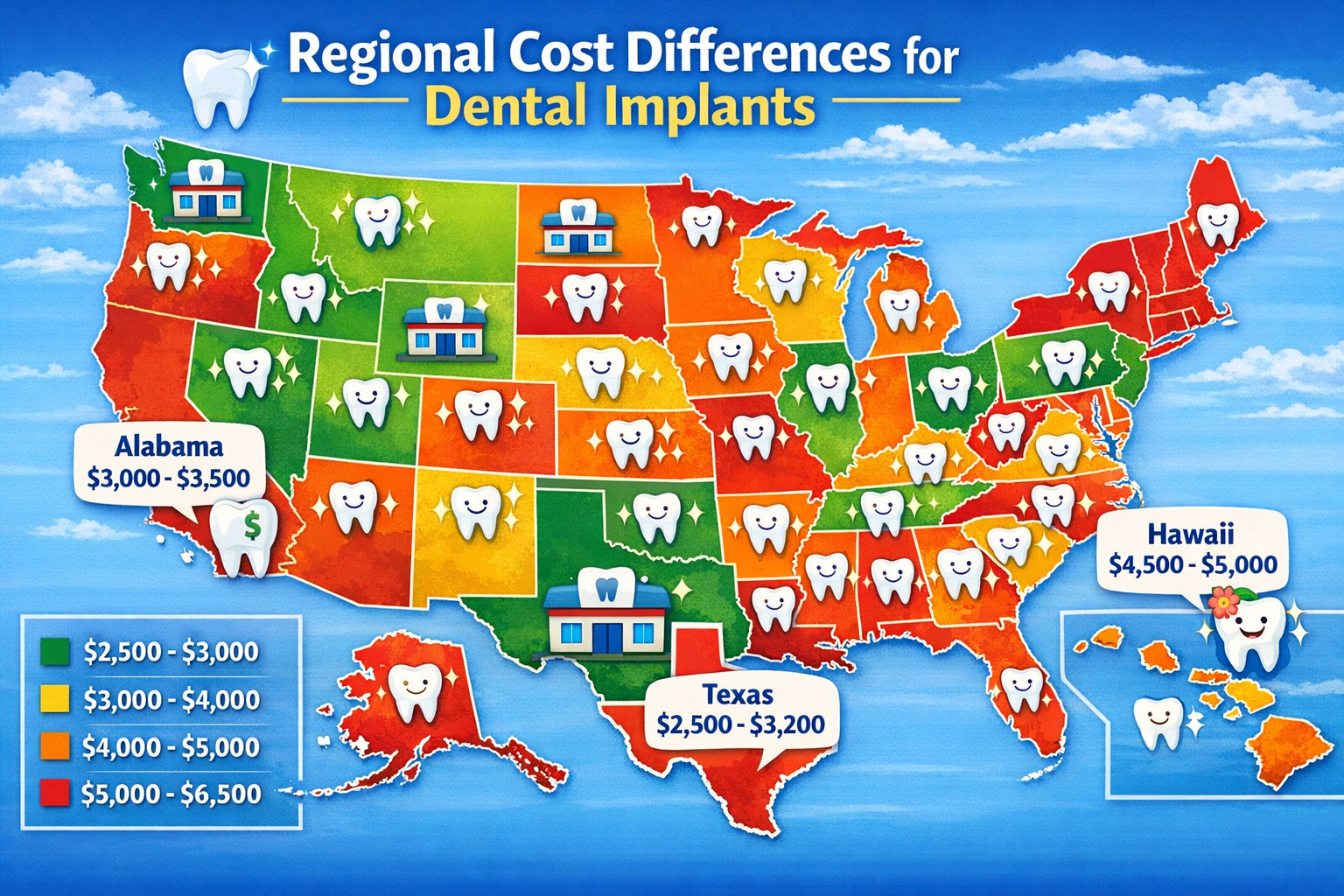
Location exerts a measurable influence on dental implant pricing. Practices in large metropolitan and coastal markets commonly face higher overhead—rent, staff salaries, malpractice insurance, and equipment costs—which can translate to higher fees for patients. Conversely, clinics in smaller cities or rural areas often report lower average fees, reflecting lower operating expenses. National pricing guides and market analyses indicate these patterns, though patient-specific procedural needs are still the dominant cost driver.
Region (approx.)Typical Single-Implant Range (approx.)Major coastal metropolitan areas$4,000 – $7,500Suburban and mid-sized cities$3,000 – $6,000Smaller towns and rural regions$2,500 – $5,000
These ranges are approximate and reflect combined surgical and restorative fees for a single implant without complex grafting. Reported ranges in consumer-facing sources and professional overviews (for example, Forbes Health and SingleCare) are consistent in showing regional variability.
Local market factors can also create price differences within the same metropolitan area. For instance, university-affiliated clinics and dental schools may offer services at lower fees for supervised care, while boutique specialty practices with high-end laboratories or premium materials will charge more. Dentists with advanced implant training or dual-specialty teams (periodontics and prosthodontics) may set higher fees that reflect specialized expertise and outcomes-focused protocols.
For patients evaluating options, comparing multiple written estimates and clarifying which services are included (diagnostics, imaging, temporary restorations, follow-up visits, lab fees) will reveal whether apparent price differences represent true savings or cost-shifting to later stages of care.
Material Selection and Technological Impact on Pricing
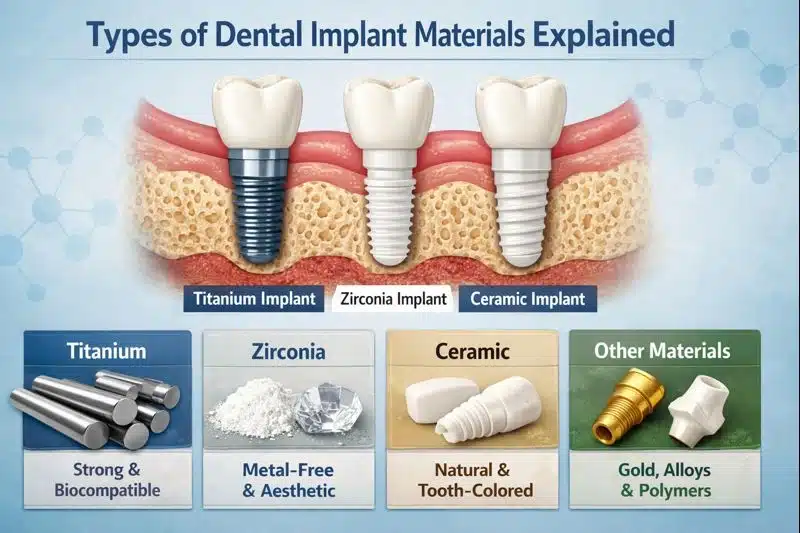
Material choices for both the implant body and the visible prosthetic crown influence cost and aesthetics. Titanium implants remain the long-standing standard due to proven strength, osseointegration performance, and broad product availability. Zirconia (a ceramic alternative) is gaining popularity for patients who prefer metal-free restorations or specific esthetic situations; zirconia implant bodies and matching all-ceramic abutments or crowns can command a price premium. Published restorative price ranges place zirconia crowns and custom ceramic abutments toward the higher end of the crown cost spectrum (often $1,500–$3,000), which contributes to a higher total system cost compared with standard titanium-based workflows.
Technology also adds cost but can improve predictability and precision. Three-dimensional cone-beam computed tomography (CBCT) provides detailed bone and anatomic visualization and is often billed as a separate diagnostic fee—commonly several hundred dollars depending on the clinic. When CBCT planning is combined with digital treatment planning and the fabrication of a surgical guide (computer-guided implant placement), patients may see increased fees in the range of several hundred to a few thousand dollars for the guidance workflow. These guided protocols can reduce intraoperative guesswork and may lower certain clinical risks, though patients should weigh that value against added expense.
Other lab and technology-driven costs include:
- Custom abutments and precision prosthetics: these can increase laboratory fees compared with stock components.
- High-end ceramic crowns or layered porcelain for esthetic zones: premium laboratory work demands higher charges.
- Digital impressions and CAD/CAM fabrication: clinics that use integrated digital workflows may pass incremental lab or equipment amortization costs to patients.
Branding and implant system selection also factor into price. Certain proprietary implant systems include higher per-component costs; conversely, widely distributed systems can be less expensive due to economies of scale. Clinicians should discuss long-term serviceability, warranty policies provided by manufacturers (where applicable), and how a chosen system might affect future restorative options.
Practical Pricing Examples and Scenario Comparisons
Below are illustrative, non-exhaustive scenarios to demonstrate how costs accumulate. These are approximate and intended for planning purposes; individual treatment plans will vary.
- Simple case: single implant with adequate bone, standard abutment, and a ceramic crown — estimated range: $3,000–$5,000.
- Case with bone grafting: single implant plus localized grafting to correct minor bone deficiency — estimated range: $4,000–$8,000.
- Complex posterior maxillary case: extraction, sinus lift, multiple grafting stages, implant placement, and a custom abutment/crown — estimated range: $6,000–$12,000+.
For larger restorations, such as implant-supported bridges or full-arch rehabilitation, costs scale with implant count, laboratory complexity, and whether a fixed or removable prosthesis is planned. Published reports and consumer resources indicate that full-arch, fixed solutions can range widely—tens of thousands of dollars—depending on the approach.
How to Obtain an Accurate Estimate and Plan Financially
Because many variables affect final cost, patients who seek an implant should ask for a written, itemized treatment plan that lists:
- Diagnostic and imaging fees (for example, CBCT)
- Surgeon or implant placement fees
- Costs for bone or soft-tissue grafting
- Laboratory and restorative fees (abutments, crowns, prosthetic frameworks)
- Follow-up and maintenance visits
Additional practical steps include obtaining a second opinion (especially for complex reconstructions), inquiring about phased treatment options, and asking whether the clinic offers interest-bearing payment plans or partners with third-party healthcare financing—keeping in mind that these are financial products and may carry their own costs. Also, review dental insurance benefits carefully: while many plans have limited coverage for implants, some insurers provide partial coverage for the restorative portion or associated procedures; verify specific plan language and annual maximums. References such as SingleCare and professional society communications provide further guidance on cost discussions.
Risks, Outcomes, and Long-Term Value Considerations
Cost should be balanced against expected outcomes and long-term value. Implants placed and restored with attention to surgical technique, appropriate materials, and sound prosthetic design are intended to provide long-term function and esthetics. However, implant complications—peri-implantitis, prosthetic loosening, or failure—can lead to additional treatments and expense. Therefore, choosing a clinician with appropriate experience, and ensuring clearly documented follow-up care and maintenance, is an important non-price factor in the overall value equation.
Patients often ask whether lower upfront cost always means good value. In some circumstances, lower fees reflect efficient workflows or practice models designed to reduce overhead; in other cases, they may omit critical diagnostic steps, use lower-cost components, or shift costs to later stages. Asking targeted questions about material brands, imaging, laboratory partners, and warranty/maintenance terms can reveal whether a lower quote is comprehensive.
Summary and Practical Takeaways
Dental implant cost in the US is determined primarily by three interlocking factors: the clinical complexity of the case (number of implants, need for grafts or extractions), geographic and market-driven pricing dif
ferences, and choices of materials and technologies. Typical single-tooth estimates commonly fall in a broad range—about $3,000 to $7,000—while adjunctive procedures and premium materials or guided workflows can increase the total. These estimates are consistent with public cost guides (for example, Forbes Health, CostHelper, and GoodRx).
For patients planning treatment: obtain a detailed written estimate, discuss material and technology trade-offs with your clinician, consider phased treatment plans if needed, and evaluate financing options. While pricing varies, working with a qualified dental specialist and reviewing itemized costs can help align clinical goals with budgetary constraints.
Q&A (short reference): How much do dental implants typically cost? Prices vary widely and are influenced by clinic, materials, and individual dental needs. Are there affordable options? Some care settings and phased plans may reduce initial out-of-pocket cost, but it’s best to consult a dental professional to balance quality and price when planning treatment.